Sunday, February 23, 2020

The final stages of research

  To really get a feel for how a film opening with my genre and its specific details, I decided to view more film openings within this genre and analyze, take notes, and share what I found on this blog posting. Then I will cover how I plan to stick to these conventions, become inspired, and how I plan to challenge them.

Moonlight (2016) Barry Jenkins
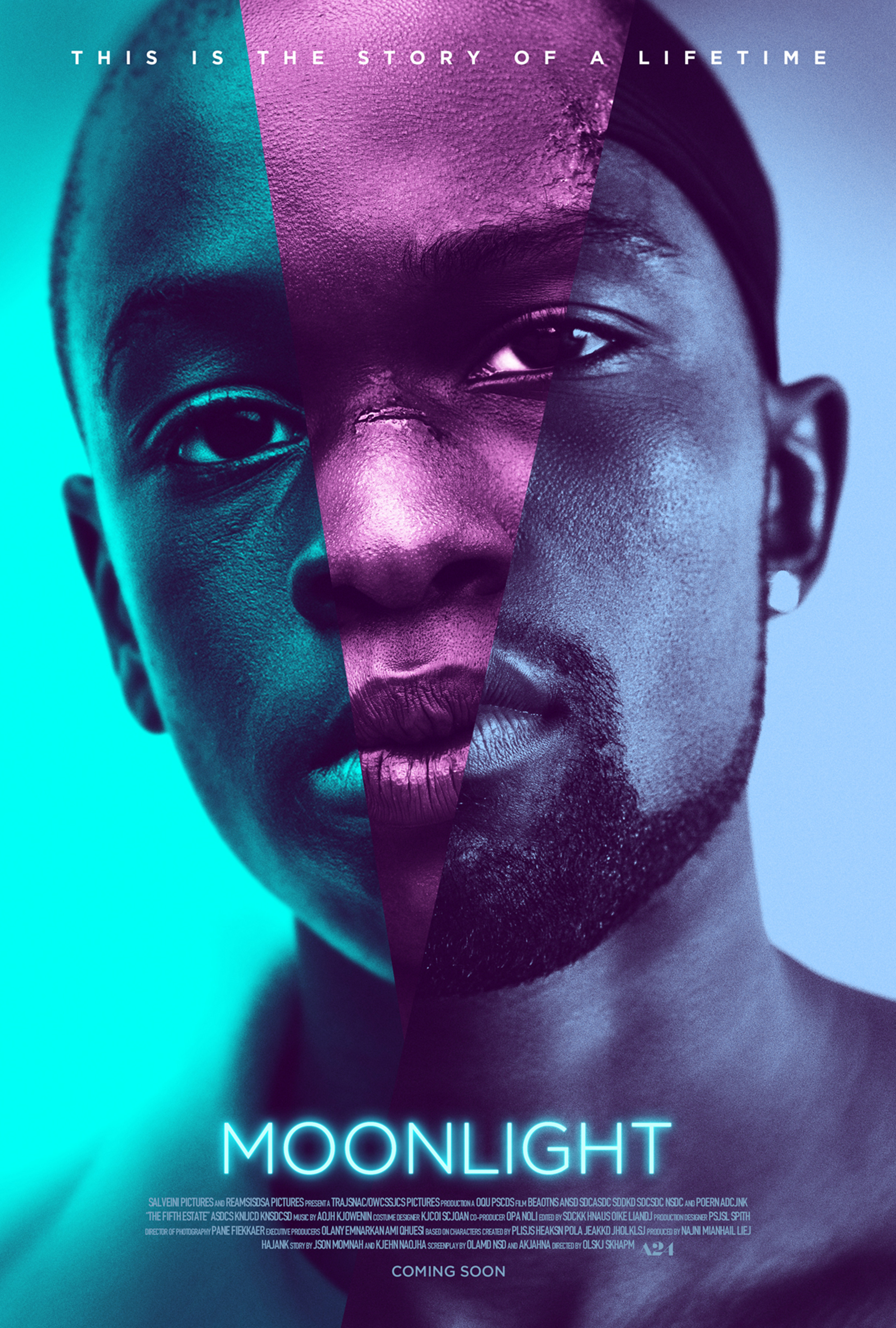
Image result for Moonlight 2016                                                                                            I have briefly discussed this film on my blog before, but it can't possibly be talked about too much. This film is most definitely in my top favorites and is markedly so within the past decade. It is about the life of main character Chiron, a young black boy in war on drugs era Miami as he grows up and into his identity with the support of the people who raised him. The representation, art direction, and overall story line is phenomenal. It also fits in with common themes to the one I plan to represent through my own film, focusing on intersectional identities and communities and how they navigate through life with these in mind.

Film Opening

 The film begins with a blank screen, with music playing as the production company's logo appears (A24) before we see a man pulling his car up onto the side of a road in an area that looks quite rundown, and there aren't many people outside apart from when we see the camera pan as the first man in the scene closes his car door and approaches two other men across the road. The camera follows him and as the conversation can be heard more clearly it is apparent that there is a drug deal going on. The camera consistently circles the three men as they interact with each other in a seemingly continuous shot that really gives the feeling of chaos in drug addiction and the sale of drugs as the only means to get by in a community where the residents are underprivileged (and how these communities tend to also overwhelmingly consist of minorities), but also establishes the setting and that there's a connection between the three, the first man starts conversation with the man selling drugs - they may be friends or know each other in some fashion- and the older man is trying to buy off of the second man. With this scene opening, though we are not yet introduced to the main character, we are introduced to what kind of setting this young boy will be growing up in and how this affects what he learns about himself.


Roma (2018) Alfonso Cuarón


Roma follows the story of Cleo, one of the two domestic workers who help Antonio and Sofia take care of their four children in 1970s Mexico City. Here, complications suddenly arise when Antonio runs away with another woman and Sofia finds herself pregnant. Sofia plans a much needed vacation to clear her head and create a tighter bond with her family, and invites Cleo along. This film has some really amazing representation, and is full of beautiful symbolism, shot in a unique fashion for a modern film set in the decade of the 70s.


Film Opening Credits

In the first three minutes are so, the opening scene is just the opening credits. However, despite these being just the credits there is still much to unpack and digest, despite this one, still shot throughout the entire opening. For about one minute of it, there is no sound, only a black and white image of floor tiles as the credits begin. After this, we begin to hear the sounds of something being mopped up, and then we see waves of water getting brushed across the floor. Since the water is consistent throughout this scene, it is fair to believe that water will be an important symbol within this piece, both as a symbol of Cleo's household duties and to foreshadow events that will take place later on. Not only this, but in the movie poster we see yet again more water from a beach behind the family embracing each other. The use of water here is a common motif throughout the rest of the film. Then we see the reflection of an airplane flying slowly by, being framed by two large buildings in the reflection in the puddle. The plane possibly represents the transitional changes in her life, and this contrast of water being mopped as a chore and a plane flying up above can suggest that there is a mundane tone to this film; it quite literally reflects a world that Cleo doesn't, and may never know as a domestic worker. Finally, the choice for a black and white filter for shooting this piece truly emphasizes the rawness of this film, that it will truly show what normal, every day people really experience with the human condition.

Call Me by Your Name (2017) Luca Guadagnino

Call Me by Your Name is a book to movie adaptation, starring Timothée Chalamet  who plays main character, 17 year old Elio. It's set in 1983, Northern Italy where Elio spends his summer days with his family in their 17th century villa where he soon meets his dad's doctoral intern, Oliver. Throughout the summer, they form a deep connection like no other that changes the rest of their lives forever. This film has been hailed as one of the best new LGBTQ films, with a beautiful story line, emotional acting, and wonderful art direction.
  

Film Opening

Right in the beginning, the film lets the audience know when and where this story is taking place with text saying "1983" that then transitions to "Somewhere in Northern Italy". The scene is set in Elio's bedroom, with another girl laying on a set of yellow bedsheets as she's looking at him pull on a red shirt and immediately there are a lot of symbolic mise-en-scene elements throughout their clothing. It's the summer, they're young and passionate and Elio is seen wearing this shirt throughout the rest of this scene, even when he meets the intern (and we know there is going to be romance involved). Their attention is then drawn to his window, where they look out to see his dad greeting another man, his intern. Elio is called to help Oliver carry his bags into Elio's room, where he will be staying. He is wearing a blue button up shirt with khaki pants, professional attire that helps give off the idea that he is there for work purposes. Throughout, there are a lot of interactive shots that never keep one shot boring, but it flows really nicely. The idea that they both start off as total strangers sharing a room, each having their own things that their summer will consist of, to the fact that we know this is a love story between the two keeps the viewers engaged, wanting to see the events that unfold that make this true.

How do I plan to stick to the conventions similar between these films, and how do I plan to challenge them?

  Firstly, I want to have my film opening include as much representation and diversity similar to the themes of these three exceptional examples. They include themes of race, ethnicity, sexuality, poverty, and so many issues that come along with these minority identities that I want to make sure is accurate to the story I am presenting. I want to raise awareness, but also represent them correctly and in a positive light - or simply put, as human beings just trying to navigate life just like the rest of us. I also want to keep the art direction engaging, whether through symbolism, introducing the main characters, setting, themes, and plot. I want to create something as beautiful as these examples, visually, audibly, artistically, symbolically and so much more. When something beautiful is created where a certain group of people see themselves in it promotes acceptance and self love to an amazing standard, something everybody deserves to have. That said, I do also want to bring awareness to the struggles these communities face simply for just being themselves. It's vital that these stories are heard, because the lack of coverage is affecting and even taking away lives, and promotes hatred for the things people don't understand. Through this, I want people to learn and expand their minds out of the little bubble their mentalities have trapped them in for so long. So in this way, I will be sticking to the overarching definition of the drama genre, where I introduce a character and present possible upcoming struggles as they navigate life, and how they resolve them.
  I plan to challenge conventions additionally through representation. Often times, these particular minorities are underrepresented in media, whether that be through minimal representation, politically incorrect representation, or being shown as background characters as an excuse for directors to earn brownie points without actually having to develop a story for these characters and make them alive and human. I want to bring them to the forefront, to bring a name and a life and a story to these people, and to make real life stories heard through fictional and engaging means. The entire purpose it to make them alive and human.

Thursday, February 20, 2020

Production Planning Outline: research, research, and more research!


The Final Decision is Here!

All about the topic I chose, and the work put in that made the choice

  I have finally chosen a topic I want to focus on! With enough research and some ideas for the filming process and story plot, I can now share my ideas. I have worked diligently on researching this topic, and will continue to do so, and I will share pictures of documenting process for planning throughout this post as I move along. As seen in my last posting, I was running through the different concepts I would consider by describing the topics I'm most passionate about, and have decided on the representation of  young Black transgender women.
A quick flip through of my outline 

Synopsis 

A young, Black transgender woman navigates life in a world filled with hatred, but finds family and a strong community in her loved ones, people who share her intersectional identities, and allies alike.

Research 

  Plenty of resources have aided me in my research of this particular demographic, I wanted to delve deeper into their history, current statistics, and the experiences of transgender youth, Black LGBTQ youth, and transgender women of color specifically through reading surveys and interacting with the communities.
   The resources I have used for the statistics shown have been highly reliable sources regarding these topics. I used the websites hrc.org (Human Rights Campaign), glaad.org (the Gay and Lesbian Alliance Against Defamation), and transequality.org (National Center for Transgender Equality) for the following statistics, as seen through these images recording my research process:
Statistics Pie Charts, a drawing within my outline
(Source: glaad.org)

  • In 2019 alone, at least 26 transgender or gender non-conforming people were murdered
    • 91% of them were Black women
    • 81% were under the age of 30
    • 68% lived in the South
  • "In the seven years that the Human Rights Campaign has tracked anti-transgender violence, an average of 22 transgender or gender non-conforming people have been victims of fatal violence per year."
  • In the reporting of these cases, the victims are often times misgendered in local police statements and media reports.
  • HRC partnered with researchers at the University of Connecticut to conduct a survey of over 12,000 LGBTQ youth and capture their experiences, more than 1,600 Black LGBTQ youth responded.
  • LGBTQ youth of color and transgender teenagers experience elevated stress and unique challenges
    • Only 11% of youth of color surveyed believed their racial or ethnic group is regarded positively in the U.S.
    • Over 50% of trans and non-binary youth say they can never use the school restrooms that align with their gender identity
  • According to a U.S. 2015 survey for transgender people:
    • Nearly half (46%) of respondents were verbally harassed for being transgender
    • 47% were sexually assaulted at some point in their life. In communities of color, these numbers were higher: 53% reported being sexually assaulted in their life time.


Research of Representation in the Media

  To ignore these statistics in general is fatal for the lives of many. And in film, representation is extremely important. In my attempts to find potentially really good representation of characters within these communities, I found it to be extremely limited. Often times, when I searched for representational films, they featured mainly white, gay, cisgender men as a representative for the entire community (completely ignoring the diversity of the LGBTQ community) and the few that represented the T in LGBTQ were usually about white transgender characters, and played by cisgender actors.
Still from The Danish Girl (2015)

  The two closest examples I got to where The Danish Girl (2015) directed by Tom Hooper, which was a biographical romantic drama film loosely based off of the true story of Lili Elbe, an artist married to wife Gerda who was also an artist. Lili is historically the first transgender person to undergo medical transitional surgeries, and due to this in the last stages of the transitioning complications had caused her to pass away. Her story has been captured beautifully by this film in a way that it will always be one of my favorite films of all time, it history of this community runs. However, as mentioned before a bigger issue within this is that the actor who played Lili (Eddie Redmayne) is a cisgender man. Though his acting in this piece was brilliant, and he did plenty of research within the transgender community to make sure he was representing the story as true to the experience as possible, the idea of a cisgender man playing a transgender woman can spread the harmful idea that trans women aren't really women, which simply isn't true. That is why it's so important to cast transgender actors for transgender roles.
Orange is the New Black cast
  However, my next example does hold up to this standard, and it does so well.  In the Netflix original has truly immortalized Lili and reminds people of just how deep the Orange is the New Black, Laverne Cox, an actress who is also a Black transgender woman, plays Sophia Burset in this show, a prison inmate who is also a hairstylist and transgender woman in the show. The experiences Sophia faces in prison as somebody who belongs to these communities, especially the abuse she endures in later seasons of the show are appalling and even more appalling is the fact that these experiences are consistent in the lives of Black transgender women in prisons all over the nation. Often times, they are even put in a men's prison where they are subject to even more transphobic violence and a complete disregard for their identities by not being placed in a women's prison. Though Sophia is not the main character in this TV show, the representation of her character and the struggles she faces within it are incredibly realistic and raw.


      As you can see, representation is scarce. Don't get me wrong, there are more productions out there representing these intersectional communities, but simply having the characters there for representation brownie points hardly makes truly good representation, and that is what is missing most often when it comes to people with multiple minority identities being shown in the media. My goal for this project is to make sure I am interacting with these communities, the news, the history, everything I can to make sure I am giving an accurate presentation of these human beings who deserve a whole lot more than the world has offered them. I want to be accurate in the information presented about the marginalization of these women in particular, but I also want to make sure that it is a story of hope, that they do get a "happy ending" for a lack of better words. That these women in it find a strong bond of love in their peers, their family, communities, and allies, and know that they are loved and can in turn develop a strong love and confidence in who they are. I want it to be brought to awareness the hatred they face because of who they are and that it can be fatal, how we who do not face these kind of struggles have to be there for these women in our lives, but to additionally share the overwhelming power of love that the world also has to offer and that it is something they need and deserve.


Tuesday, February 18, 2020

The Beginnings of my Production: getting inspired, my ideas, and plans

  I won't lie, trying to choose out of the numerous topics I would love to focus on in the opening scene of my own production is a tough decision. The things that inspire me the most are current events and the diverse human experience, both my own and the people around me. I tend to love artistic choices that make a statement, typically societal, philosophical, or political. For example, the topics I am the most passionate about are heavily based in human rights and awareness, such as erasing the stigma of conversation about mental health and illness, talking about the LGBTQ+ community, and the inhumane treatment of immigrants (particularly immigrants of color) because all of these are parts of my identity, or communities I belong to, and certain parts of these topics are my own experiences.

  Right away, I knew I wanted to make something that involves something from one of these topics. This is why I figured drama would be the best fit genre to depict the life of a character who belongs to one of these communities, and not only preface the struggles that they have to face because of said community (or potential intersections of any three of those communities) but show the beauty of diversity and the good things in life that they deserve. These communities unfortunately face awful hardships in life, ableism, homophobia and transphobia, racism, and xenophobia, but a goal of mine I want to pursue within my opening scene is to bring awareness to these struggles and their voices, the human behind them, but to also show that despite anything horrible that life throws their way that they do belong here, they do have a reason to stay in this world, and that they do have a purpose they need and deserve to live out.

  To begin with my outlining process, I knew that depending on the topic I want to focus on, I would have to plan on getting the stories of people who belong to these groups. Though I deal with mental health issues, I am very high functioning. If I were to go this route, I would want to research and hear the stories of people who are lower functioning, or who suffer more debilitating disorders than my own. Though I am an immigrant, I am a white European immigrant. If I were to take this route, I would want to make sure I am depicting the stories of people who suffer at the hands of racism and xenophobia who are also immigrants, because that is not something I face. Finally, if I were to go with the LGBTQ+ route, I immediately saw two possible ideas. Here, I could either intersect the topic of mental health and this particular community, given that statistics show that LGB adults are more than twice as likely to experience a mental health condition than their heterosexual counterparts,  LGBTQ people in general are at higher risk than the general population for suicidal thoughts and attempts, high school LGB people are almost five times as likely to attempt suicide to their heterosexual peers, and 48% of all transgender adults report that they have considered suicide within the past 12 months, compared to 4% of the entire US population. ( https://www.nami.org/find-support/lgbtq )
   
  The second possible idea was to focus on the topic of the most targeted group in the LGBTQ+ community; transgender women of color, more specifically black transgender women. With the age expectancy for transgender women being 35, and 26 transgender people (again primarily black transgender women) brutally murdered in 2019 alone, this is an appalling statistic that has yet to be addressed by anybody outside of the community, often times fully ignored. It should've never been ignored to begin with, they were people too: Dana Martin (31),  Ellie Marie Washtock (38), Jazzaline Ware (34), Ashanti Carmon (27), Claire Legato (21), Muhlaysia Booker (23), Michelle Tamika Washington (40), Paris Cameron (20), Chynal Lindsey (26),  Chanel Scurlock (23), Zoe Spears (23), Brooklyn Lindsey (32), Denali Berries Stucky (29), Tracy Single (22),  Bubba Walker (55),  Kiki Fantroy (21),  Jordan Cofer (22),  Pebble LaDime Doe (24), Bailey Reeves (17),  Bee Love Slater (23), Jamagio Jamar Berryman (30), Itali Marlowe (29), Brianna "BB" Hill (30), Nikki Kuhnhausen (17), Yahira Nesby (33) Johana "Joa" Medina (25),  Layleen Polanco (25). 
( https://www.hrc.org/resources/violence-against-the-transgender-community-in-2019)

  The ways I plan to hear these stories and experiences are through heavy research. I plan to continue with the research I presented here, listen to the stories of my peers and others, listen to the people within my intersectionalities that are more marginalized than me, read books, watch documentaries, read articles, interviews, ask questions to the people I want to involve, and get as heavily informed as possible. I plan to cast potential actors for the film by announcing a request for people around the area who fit the description of the main role(s) on Twitter and Instagram. These are fantastic tools to reach diverse audiences, I have personally seen the reaching success of production companies such as Blumhouse, using Twitter to call on a very specific person for a film plot which gained a lot of attention on the app, calling for a transgender Latina woman who was also a bruja as there main character to a film which follows a transgender Latina teenage girl who is kicked out of her home for coming out, and goes to live with her bruja grandmother. Another great example I have seen where social media has been used to hire actors, is that of the highly successful A24 production, The Florida Project. Bria Vinaite was hired through instagram to play the role of Halley, the main character  six year old Moonee's struggling mother. This was her very first acting experience, and it still ended up making the film a truly authentic piece. With this idea in mind, I also plan to work with the actors rather than tell them every little thing that needs to be said or done. I want my direction to be a guideline, not the rules because I want the person's experience being who they are in this world to shine through the most of all.

  In my next blog post, I will be discussing the finalized option for the subject of my film opening production, and how I plan to go about it. In the mean time,  keep an eye out for more of my progress!


Monday, February 17, 2020

Film openings within Drama

Drama and it's Film Openings

The importance of film openings

Why is a film opening important? It sets the scene, the time, the place, the people, and the setting. Most importantly, it has to draw the audience in. Without a great film opening, there is not much incentive or reason for viewers to keep on watching. This not only has been true throughout media history, but with time audiences have gained a greater need for instant gratification. With new technology making everything available to you almost the minute you want it, our patience for "something exciting" has slimmed down dramatically. However, this doesn't necessarily mean there has to be a fast-paced, action-packed beginning that throws the audience straight into the plot (though this certainly is an effective method), it just means the audience's attention needs to be captured and engaged in a way that is appropriate to the context of the movie's plot and potential sub-genre. That said, genres rules are not set in stone. They should be used as a guideline for your artistic expression, however that may look.

Drama Film Opening Samples:

                                                     A Beautiful Mind (2001) Ron Howard


A Beautiful Mind is a drama loosely based off of the story of mathematician, John Forbes Gnash, and his onset of schizophrenia in college that reaches a crescendo in his early career and marriage, but ultimately becomes a renowned mathematician that made fundamental contributions to game theory, differential geometry, and the study of partial differential equations awarded with the Nobel Memorial Prize. The film opens with a scene set in what appears to be a classroom. The room is filled with neutral colors, typically brown which is seen on the walls. This gives a simplistic feeling to it, that the focus shouldn't be on the room itself but what is going on inside it that gives it's context. A series of shot/counter-shot editing techniques go back and forth between the man giving a lecture to his students (again all dressed in neutral colors, suit attire), and the main character John Gnash, who is seen sitting alone, the only one in a grey-black suit compared to his peers, and is seemingly distracted, not looking directly at the lecturer and seems quite fidgety. An eyeline match between him and another student, who is among his peers and sits confidently, paying attention to then looking back and smirking at John in a condescending way emphasizes the idea that John is an asocial and                        nervous kind of character. These edits are all captured with slow zoom in shots that further establish the kind of tone this film, which is that of the perspective of a mentally ill man and how his perspective influences his life. Then, it cuts to a scene outdoors, the men gathered outside socializing. Here we see a slightly different version of John, he's observant, reserved but calmer, and is quite witty. Here, the smaller, less obvious details that something is different about John are insinuated through what he observes.

12 Years a Slave (2013) Steve McQueen


12 Years a Slave follows the story of Solomon Northup, a free black man living in New York pre Civil War, who is captured and enslaved in the south. He faces the cruelties of a slave owner, alongside unexpected kindness from another. After twelve years, he meets an abolitionist from Canada by chance that changes the course of his life forever. The opening scene to this particular film begins with a mid shot, and shot/counter shot editing techniques to convey a group of people being given instructions. We see a group of enslaved people being ordered by a plantation owner on how to properly cut sugarcane. They're all wearing the same drab clothing, showing them stripped of their humanity and individuality and gives the uniformed sense that they are all experiencing this as a collective solely because they happen to be black people in the south. Something really clever I noticed was that the owner said "make it sing", referring to cutting the sugar cane correctly, it then cuts to the camera moving in through the fields to the enslaved people cutting the sugarcane as they sing cultural songs while they worked. Then there's a low angle of two white men sitting idly by, watching the work happen while they fan themselves. The angle helps give the perspective of the enslaved people working, both the literal idea that the white men are above them but also contributes to the lack of power they have to defend themselves against the cruelties of these white men. The scene then transitions to one with a shack, and several of the enslaved people and the main character eating their  "meals", when Solomon notices the dark juice of the berries. Later that night, we see him try to write a letter with a makeshift pen and the berry juice but is shown to fail when we see his facial reaction and chucking the ink pot off the table in frustration.

Friday, February 14, 2020

Drama Genre: What is it and what makes it?

 Drama

What is Drama?

Different from theatrical drama, in television and film the drama genre is one of narrative fiction that is intended to be more serious than humorous in tone, that focuses on the development of realistic characters who must deal with realistic emotional and/or physical struggles that make sense to the setting of the production.

What makes a film belong to drama?

As mentioned in the definition above, it must portray realistic characters with realistic struggles that are reasonable to the setting. However, despite this seemingly strict definition of "realism" that only goes as far as what the creator has in mind for the plot. What is the setting? What is the time period? Is it completely fictional or loosely based off of a real person? What makes a drama film could mean many things, given the various sub-genres that branch out from this broad one up for creative interpretation. As long as the production depicts realistic people facing realistic struggles throughout the plot, drama can be whatever you make it.

Difference between television drama and film drama?

The only change here is the format, while the definition stays the same. With television (TV shows) the drama plot needs to be built to last an extended period of time, episodically and there is usually a new drama within each season. With film, the drama plot concludes within a few hours, and should be constructed accordingly.

Drama's Sub-genres:

  •  Historical/Period Drama - productions with the theme of drama set in a specific time period or era
  • Image result for the titanic movie
    Ex: Titanic (1997)
  • Romantic Drama - productions that focus on the elements of love and it's emotional struggles
    • Image result for the notebook
      Ex: The Notebook (2004)
  •  Melodrama - productions with a plot that usually endangers the character to invoke emotional reaction within the audience
  • Image result for oliver twist movie
    Ex: Oliver Twist (1948)
  • Crime - productions that follow a criminal or major crime taking place
          • Image result for the godfather
            Ex: The Godfather (1972)


Tuesday, February 11, 2020

Music Marketing

                                   Alternative Rock

  The genre that preceded this revamped, modern trend, Rock, was all about emerging in artistry with newer ideas, writing songs and making performances that express "the human condition", and created devoted fans with a love for this newfound expression of the vulnerabilities of life. Alternative rock soon emerged after, while Rock bent societal constructs of what was deemed "acceptable" behavior which appealed to younger audiences, Alternative rock broke them entirely. The idea of something being alternative often makes us think of shattering artistic boundaries and stepping out of the confines of what is expected of us, and this genre does just that by taking it a step further and breaking rules of the singular Rock genre, though sticking to the genre's roots, now many more sub genres branch off and create a much more diverse audience than ever before.

Current Marketing Trends in Alternative Rock

  A major part of current trends in the marketing of a band to their desired audience are the use of social media platforms. Here, the distribution of their products for sale can be advertised through virtually any means, to a wide array of diverse audiences, predominantly adolescent and young adults with Gen Z and Millennials taking up the majority. Which for bands and artists within this genre, is really helpful as alternative rock is more modern and appeals to younger audiences, usually making these two generations their biggest consumers. Among these platforms, the most popular are Instagram, Twitter, and Facebook.  Popular alternative-indie rock band The 1975 illustrates this example well with using social media to promote typewriter style letters with hints about what is to come for the upcoming album. This created fan engagement online with theories and ideas that would spread around the fanbase rapidly, dipping into the feeds of people who may have not originally belonged to the band's fanbase, and gained a lot of traction for their pending release. Another way they created fan engagement with theories was by completely deleting their social media altogether. It may seem counter-productive but in turn spread potential theories like wildfire, rumors that the band was breaking up, or that there was a new record in the works, kept fans consistently on their feet with keeping up to date on the band's status. Finally, they ended their campaign with a series of pop-up shops that sold new merchandise, such as shirts and vinyls for their album, all of which were said to embody their social media presence at the time of its release.
                                                        Case Study #1: The 1975
  
  Another trend that is consistent throughout the marketing of this genre is live performances to promote themselves and their products, particularly at festivals that host alternative genres that are really popular amongst their common target audiences such as Vans Warped Tour, III Points, Riptide Music Festival, and many more across the country. Often times it is cheaper for these artists to perform at venues that host multiple artists, as they don't have to purchase extra equipment and the majority of said equipment is provided for them. In turn, they profit having not spent as much money as if they were to have their own event, and ticket sales raise money for them, even in the future, because fans who are attracted to these events for one artist in particular may find themselves as new fans for the newer artist performing, gaining them positive attention. One example of using these festivals for promotional marketing purposes is the early 2000s alternative rock band, The Killers. In 2019, they performed live at the Riptide Music Festival to promote their sixth studio album, which also happened to be the band's first performance in two years. This really gained the group a profit, not only did it attract new fans of their latest album that would air on radio from the hosts of this particular festival, but it brought in their oldest fans too. They were able to capitalize off of both their modern, young target audience, and off of nostalgia and together they are a powerful combination.


                                                      Case Study #2: The Killers

How we Chose to Develop the Brand of our Band

  My group and I's band chose the name BLKHONEYMOON, a short and easily memorable name, written in a way we believe works well with the overall look, aesthetic, and sound of the genre. Speaking of aesthetics, we use this heavily and consistently throughout our branding. Much like the name of our band, we wanted something that would be just as simplistic while being artistic simultaneously, something that would appeal to our target audience, Gen Z and Millennials.  
  To do this, we chose a bold font for our band logo, dark colors with pink accents. We drew inspiration of this from the aforementioned, The 1975. In the band's debut title album, they chose a dark, minimalistic look, which had a dark background with a white neon sign framing their band's name, which was also neon and white. In their second studio album, I like it when you sleep for you are so beautiful yet so unaware of it, they chose to maintain the same iconic imagery with the embellishment of their name, however this time the once black background is white and the frame surrounding the band's name as well as the band's name itself are neon pink. These two album covers gained a lot of popularity among young audiences, blending in with the popularized aesthetic on social media at the times of their release, but simultaneously standing out just enough in it's simplistic yet artistic imagery to make a name for themselves within the past decade.
  For more information on our process, click the link  to our Google Slides presentation here:

Our Marketing Products

We chose to go a more traditional route with our marketing products and merchandise, while still giving our audience a wide variety of options within each product. In total, we have a variety of shirts and hoodies, pins and stickers, album vinyls, and limited edition collaboration with Doc Martens, a popular shoe brand worldwide and even more popular within the fanbase of alternative music and style. Below are some samples of what our products look like and their prices (also available in our 
powerpoint):


What I learned about marketing and development of a marketing campaign

  Important things I have learned about marketing in this music genre and industry are the importance of accessibility, diversity, and making your community feel like a tight-knit one, and knowing your audience.

  Through accessibility, the use of social media platforms, streaming services, and websites are vital to modern day profiting.

  Social media platforms, such as Instagram, Twitter and Facebook, provide an easily accessible way for a broad range of potential fans and audience members all over the world. Here, marketing is made easy, with the ability to post promotional tweets, posts, and stories, link websites for the band, tickets, and other merchandise, and the ability to interact with your audience through forums, comments and likes truly make this a hub for the band to connect to a diverse world of people who have been there since the beginning, and for potential new people to call fans.

   Streaming services, such as Spotify, Pandora, Apple Music, and Souncloud are taking over in the way people consume the music form of media. Again, it feeds into the easily accessible factor that people want, and apps like Spotify for Artists can give a feel for where you stand in popularity both locally and internationally.

  Finally, knowing your audience may just be the most important thing above all else. Before you can even use certain techniques, know your audience. Know who you are aiming to target in a sea of potential consumers. Are they older generations or newer generations? What are the trends within said generation? What way are they most likely to view the way you put yourself out there? And how will you draw them into becoming a dedicated fan who views your shows and purchases your products? 


Critical Reflection

    My short film, Reaching Equilibrium, is about a teenage girl named Evelyn who was recently diagnosed and starting treatment for bipolar ...